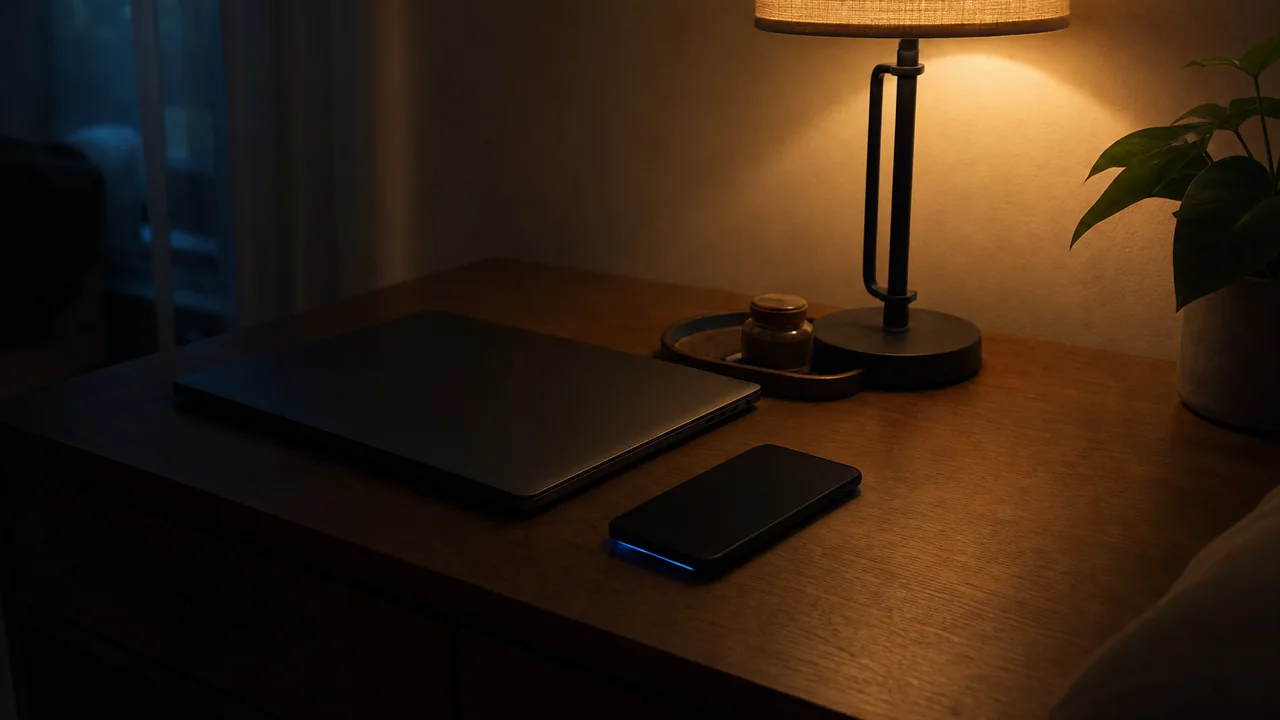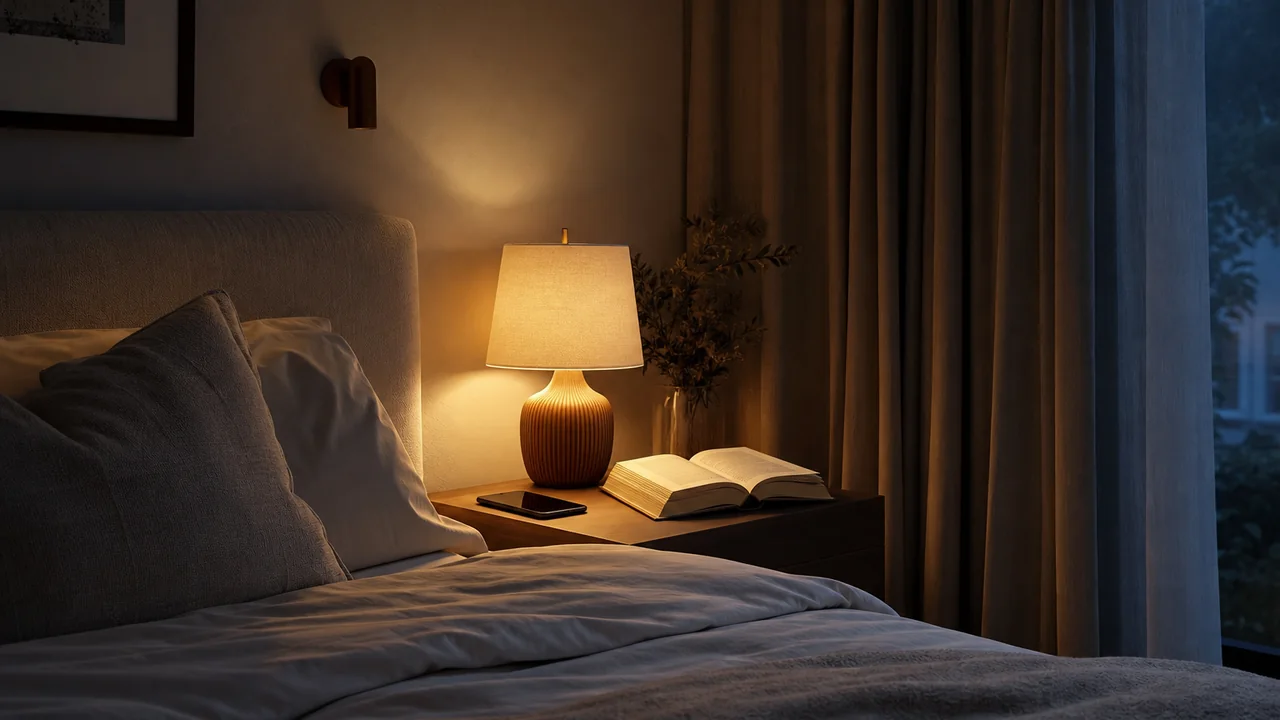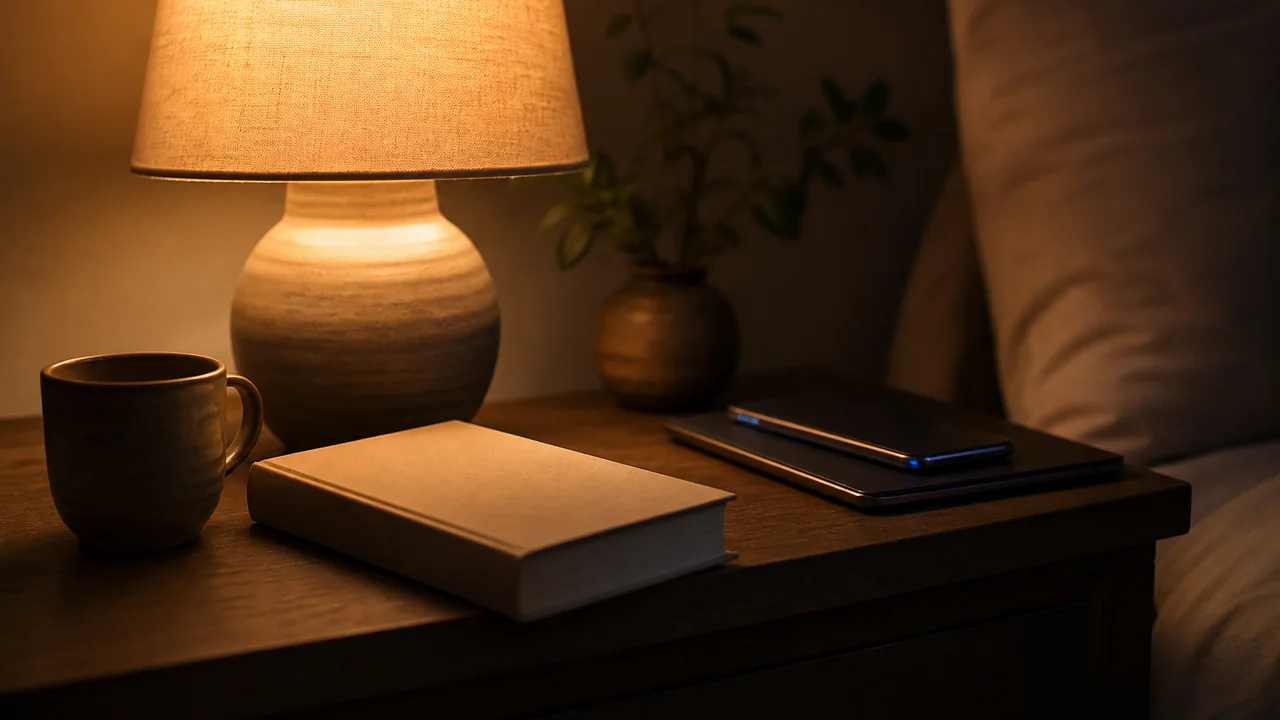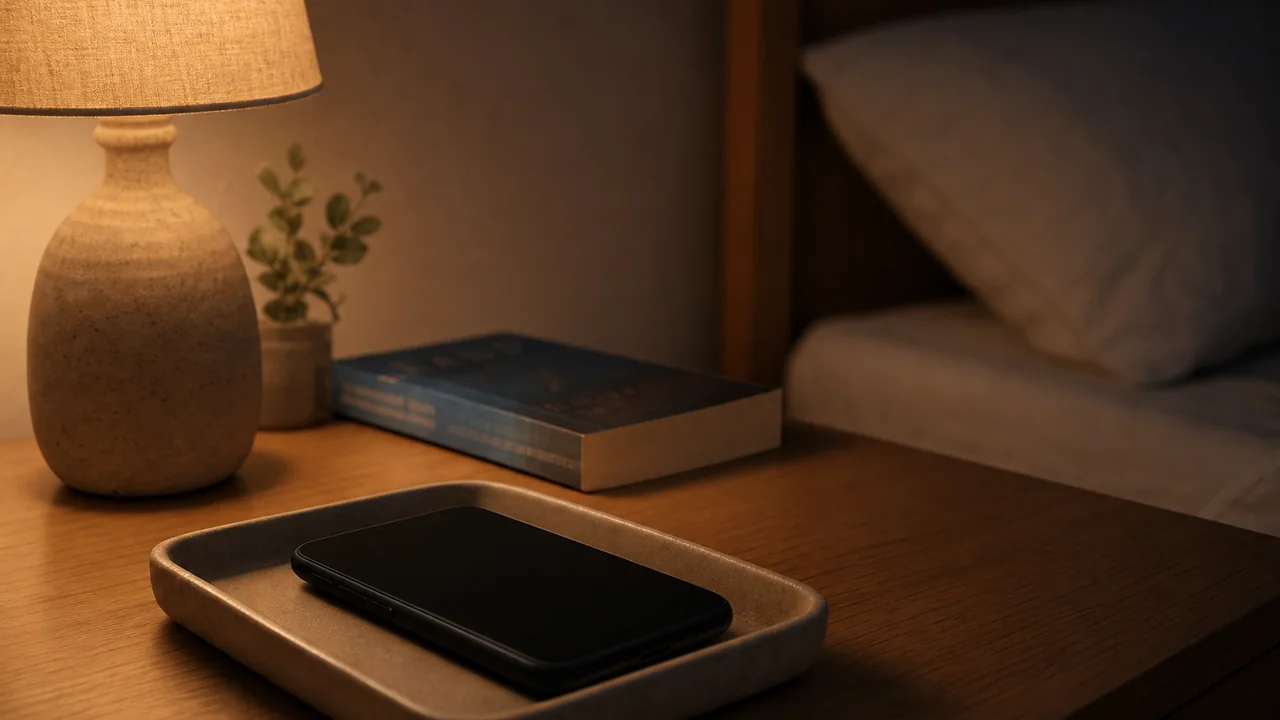
How to use this result
Screen advice gets ignored when it sounds absolute. This planner gives a latest cut-off time and a fall-back rule for nights when the screen cannot disappear completely.
Close, bright, active devices need the biggest buffer. A TV across the room with warm room light usually needs a smaller change than a phone held near the face in a bright bedroom.
Use the result as a boundary for scrolling and work, not as a ban on every calm activity.
Run the tool, choose one change, repeat it for two or three nights, then compare the room notes. A repeated pattern is more useful than one perfect-looking number.
Bedroom sleep context
This page sits in the screen-boundary cluster. It treats blue light as one part of a wider evening exposure pattern: brightness, distance, content, room light and whether the device keeps the brain in work or scrolling mode.
Practical inputs to compare: Measure hours after 7pm, device type, distance from the face, room lighting and the latest realistic stop time.
How to read the result: Treat these inputs as a bedroom pattern, not a one-night verdict. If the same cue shows up on several ordinary nights, the next change is easier to choose and easier to reverse if it does not help.
- blue light
- screen brightness
- phone distance
- night mode
- active scrolling
- screen cut-off
- close-range device use
- bedside charging
Keep it narrow: Do not change lamp type, screen cut-off, bedding, window opening and wake time on the same night. Hold the other cues steady so the page stays linked to one room question.