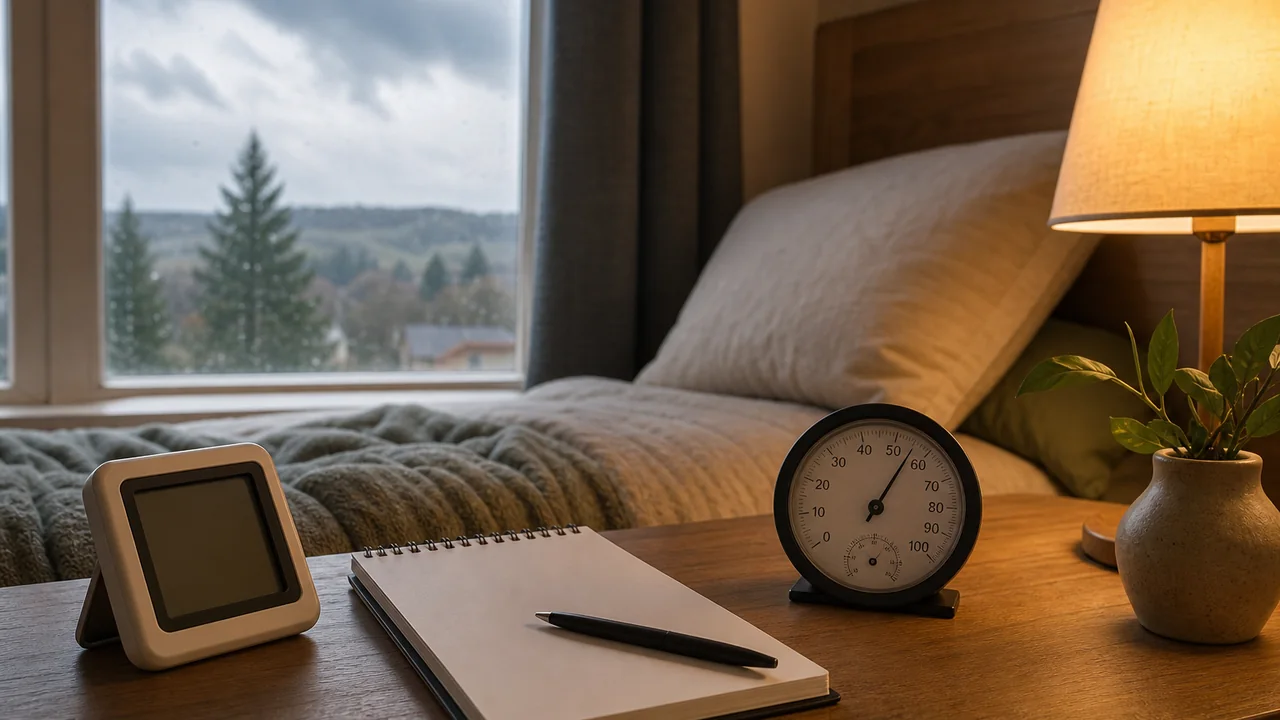
Drift Light tools use simple observable bedroom inputs: time, lamp type, screen pattern, room temperature, relative humidity, window condensation, airflow and routine constraints. The goal is a practical next-night change, not a medical or laboratory measurement.
The calculators use transparent rules: ninety-minute sleep-cycle approximations where relevant, dew point estimates for condensation risk, energy cost arithmetic from watts and tariff, and conservative light-timing bands for evening and morning routines.
Outputs are written as confidence bands and next actions. They avoid exact claims about hormones, diagnosis or treatment. When a result mentions room equipment, it appears only where the room pattern naturally fits heat, cold, damp or airflow.
For stronger results, record the same room for several nights. One bedtime reading is weaker than a pattern across normal evenings, late-screen evenings, warm nights and damp mornings.
The tools are built around a repeated-room-test idea: change one cue, leave the rest of the bedroom routine stable, and compare whether the next morning is easier to interpret. This is why many results mention two-night or seven-night checks rather than instant certainty.
When a page covers children, shift work, travel or persistent sleep disruption, the wording becomes more cautious. The site can help organise the bedroom environment, but it should not replace appropriate professional advice where health, safety or work duties are involved.
The main public topic clusters are evening light, screen exposure, sleep timing, morning anchors, temperature stability, humidity, condensation and airflow. Keeping those clusters explicit prevents the site from drifting into broad wellness advice.
Where a calculator uses a number, the page explains the assumption in plain language: minutes before bed, room temperature, relative humidity, watts, tariff or a simple time window. Where a number would imply false precision, the page uses bands instead.
The guide pages are written to support the tools rather than replace them. Each guide should lead back to a small next-night test so the reader can compare the room before making a bigger change.
Source approach
Primary reference themes include circadian timing, sleep hygiene, bedroom environment, thermal comfort, humidity and practical home ventilation. Drift Light deliberately converts those themes into everyday room tests rather than clinical advice.
The content favours practical UK bedroom observations: room temperature in Celsius, relative humidity, window condensation, dark mornings, warm lamps, close phone use, airflow and everyday energy costs. The result should be useful without specialist equipment.