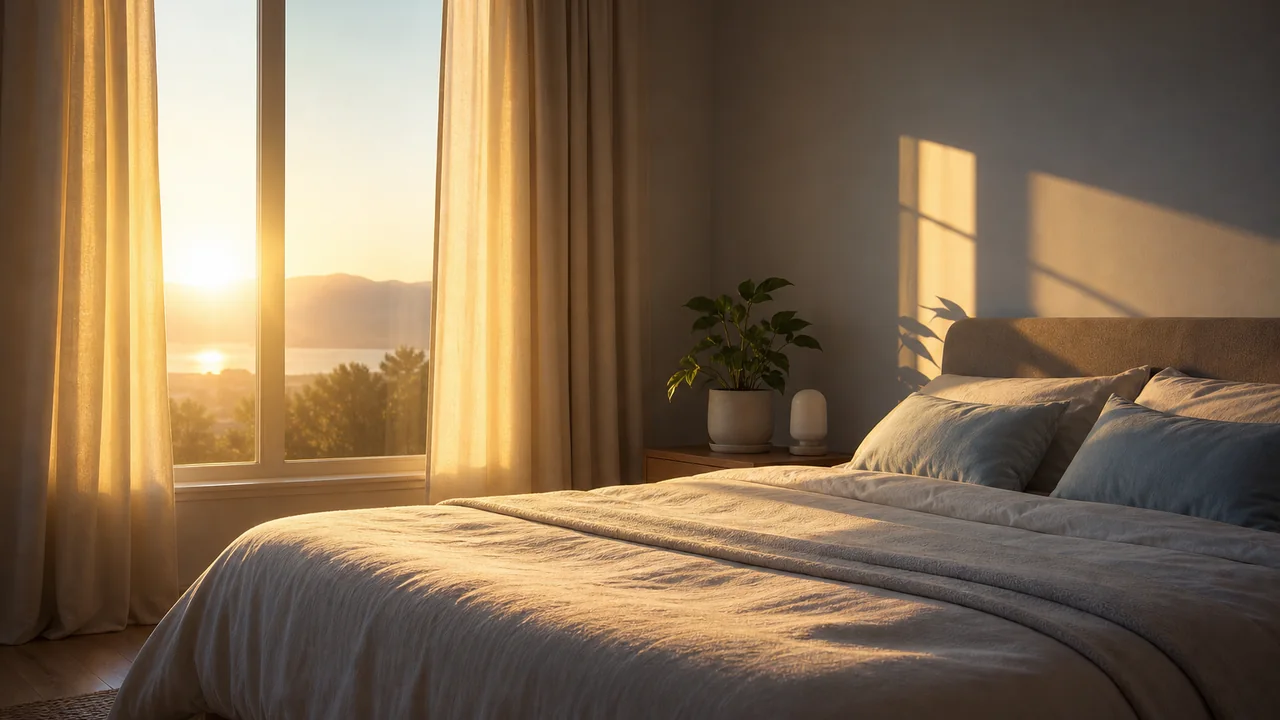
Morning light is a start signal. For people whose sleep drifts late, the first consistent light cue can matter as much as the evening routine.
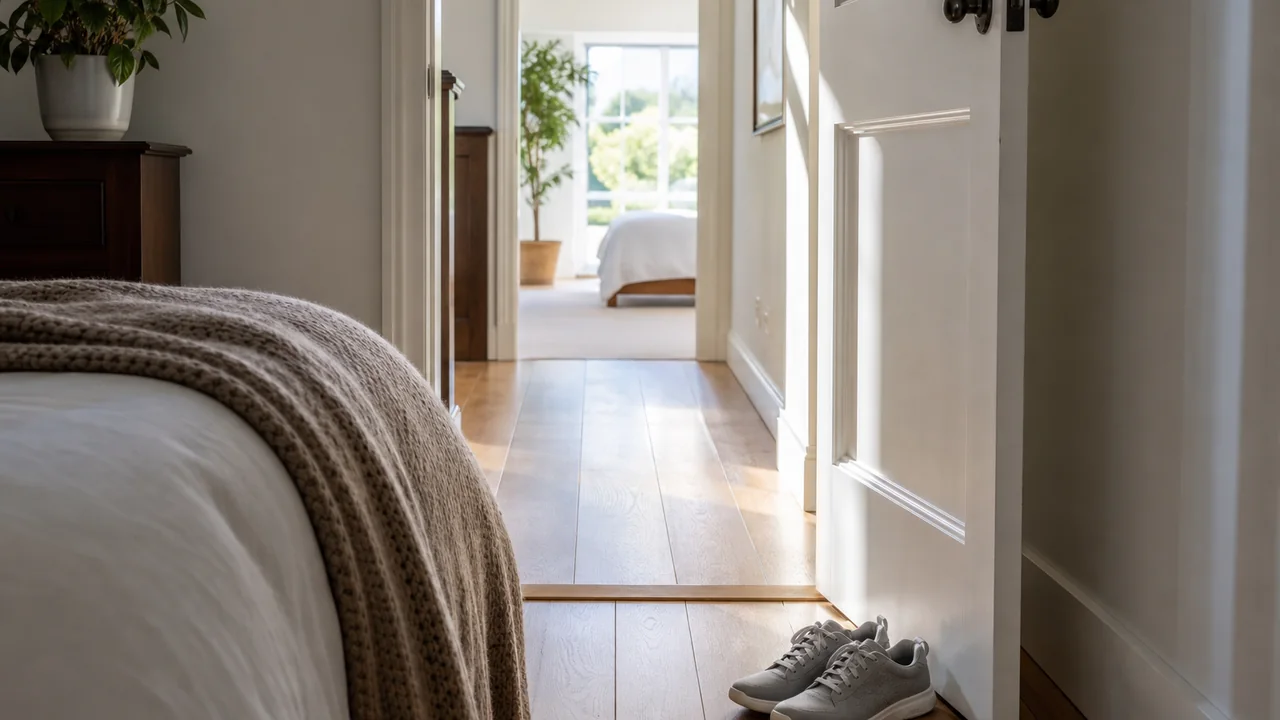
Outside light is usually stronger than a window, but the best routine is the one that happens. A bright window seat, a short walk, opening curtains immediately or a wake-up light can all support a clearer morning start.
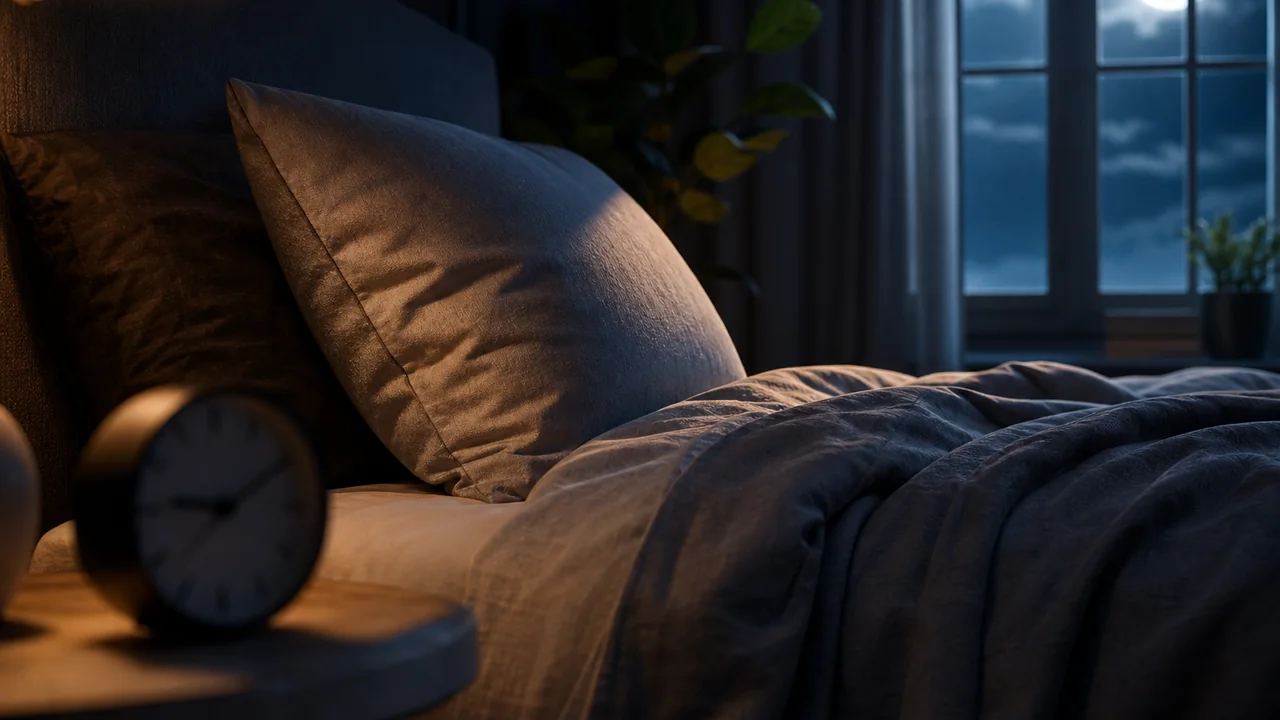
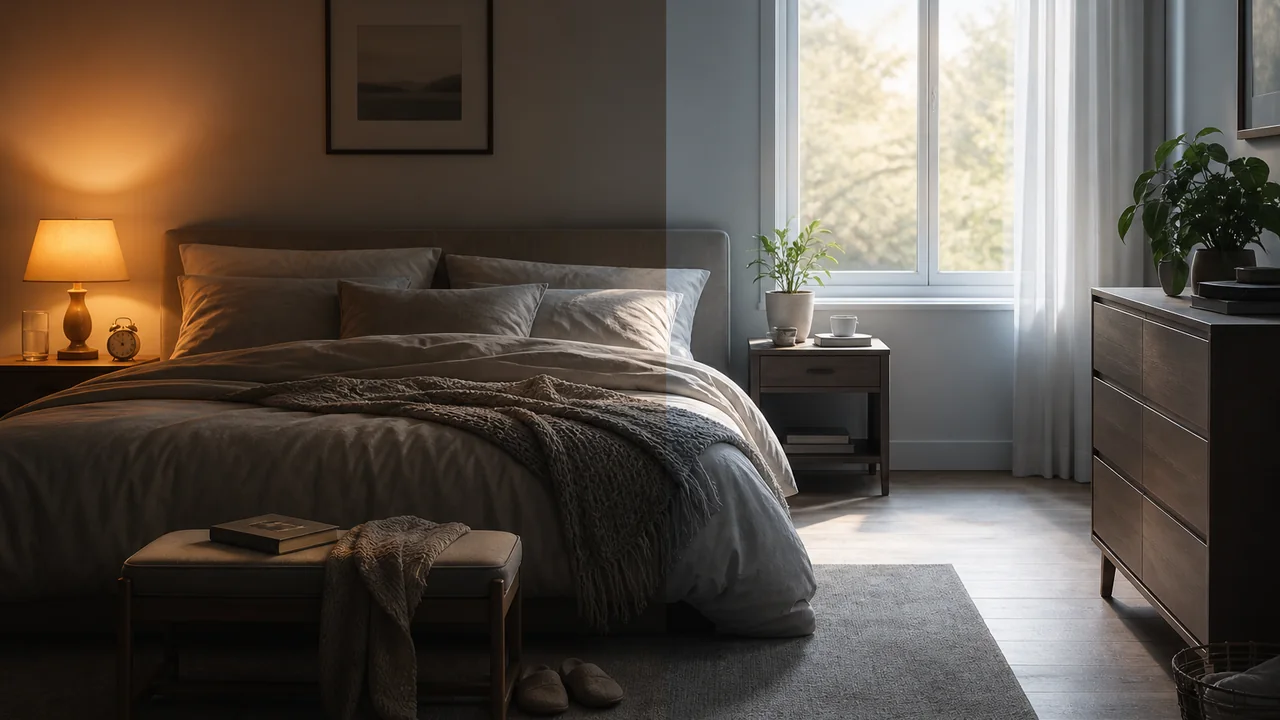
Pair morning light with evening dimming. One without the other is weaker because the day needs both an opening cue and a closing cue.
Where this guide fits
This page is part of the sleep-timing cluster. It connects the clock question to the bedroom question: when to start lowering evening cues, when morning light should anchor the next day, and how to choose a repeatable window rather than a perfect minute.
Practical inputs to compare: Use wake target, natural wake drift, time to fall asleep and morning-light access as the repeatable inputs.
How to read the result: Treat these inputs as a bedroom pattern, not a one-night verdict. If the same cue shows up on several ordinary nights, the next change is easier to choose and easier to reverse if it does not help.
- sleep cycle
- circadian rhythm
- sleep latency
- wake time
- chronotype
- morning light
- bedtime window
- sleep pressure
Keep it narrow: Do not change lamp type, screen cut-off, bedding, window opening and wake time on the same night. Hold the other cues steady so the page stays linked to one room question.
What to try tonight
- Choose one cue: light, screen boundary, temperature, humidity or airflow.
- Keep the sleep target and morning note simple.
- Repeat the change before judging it.