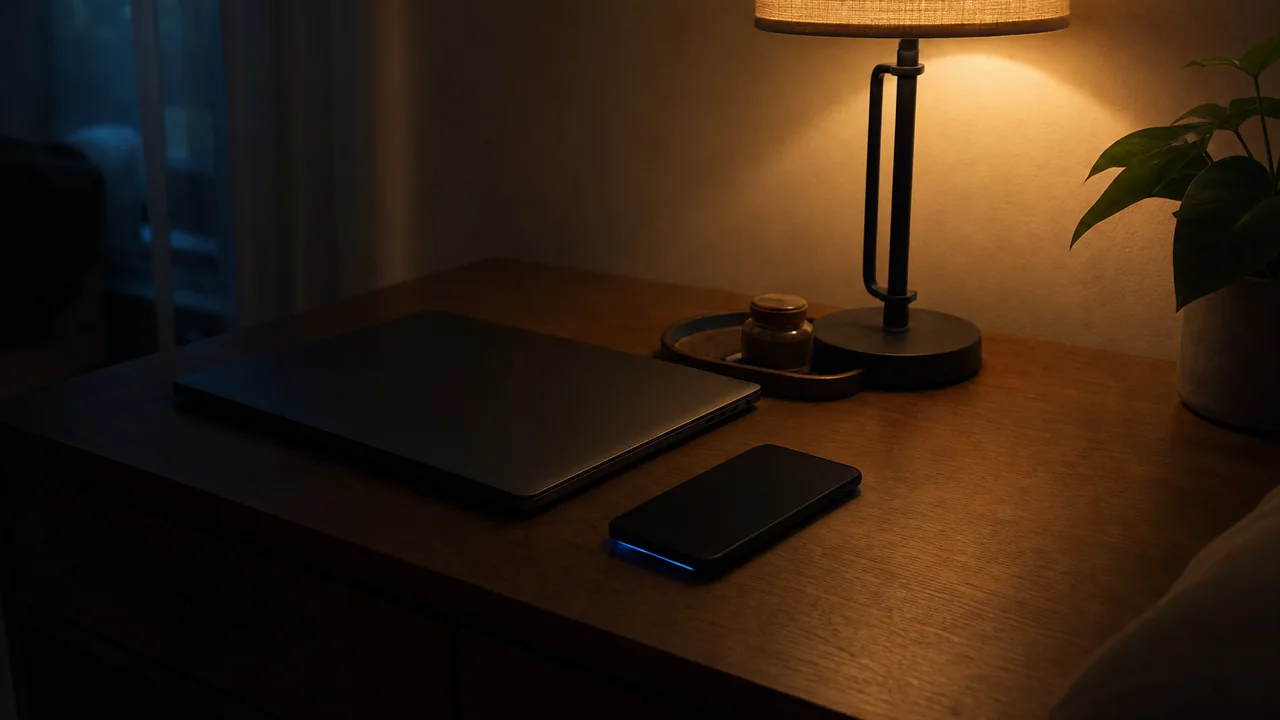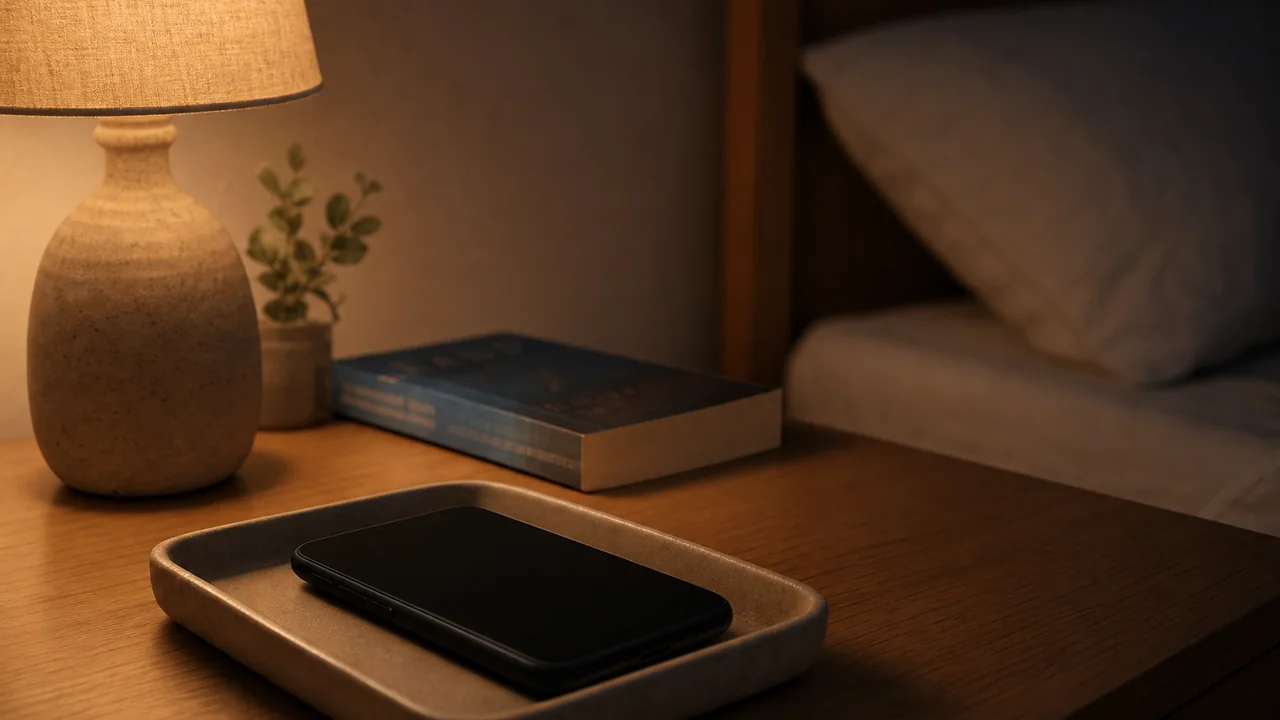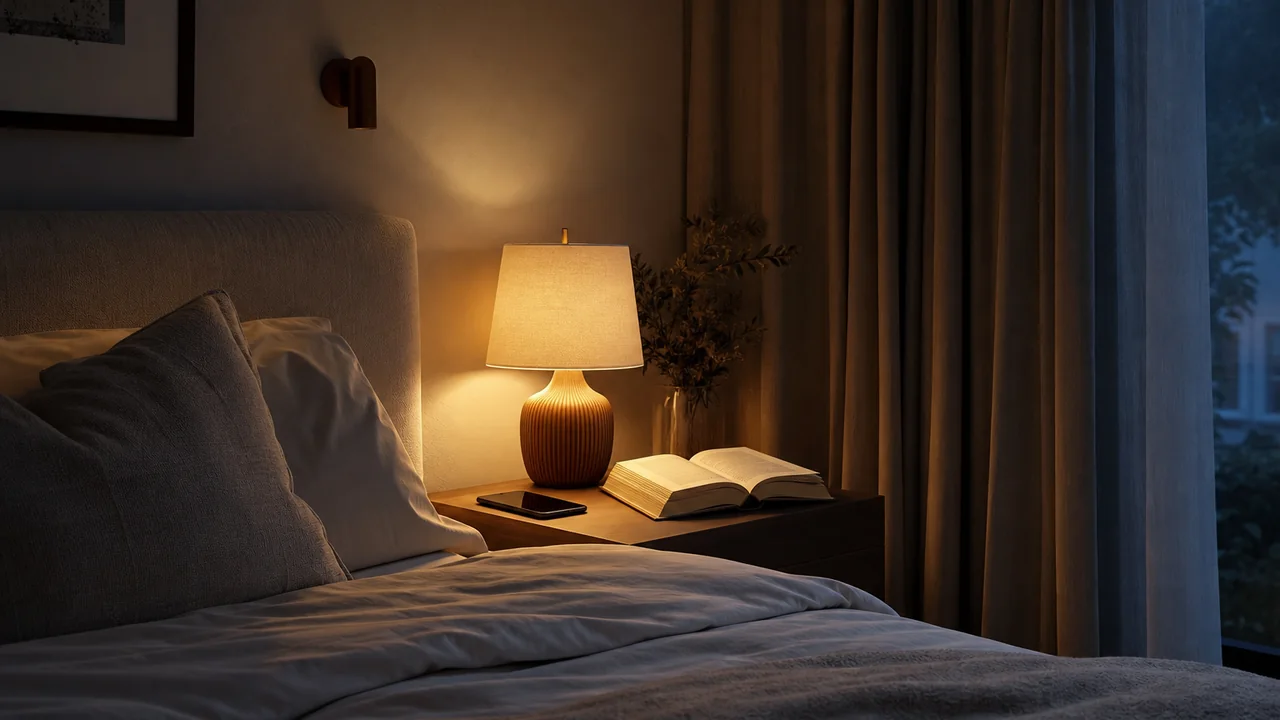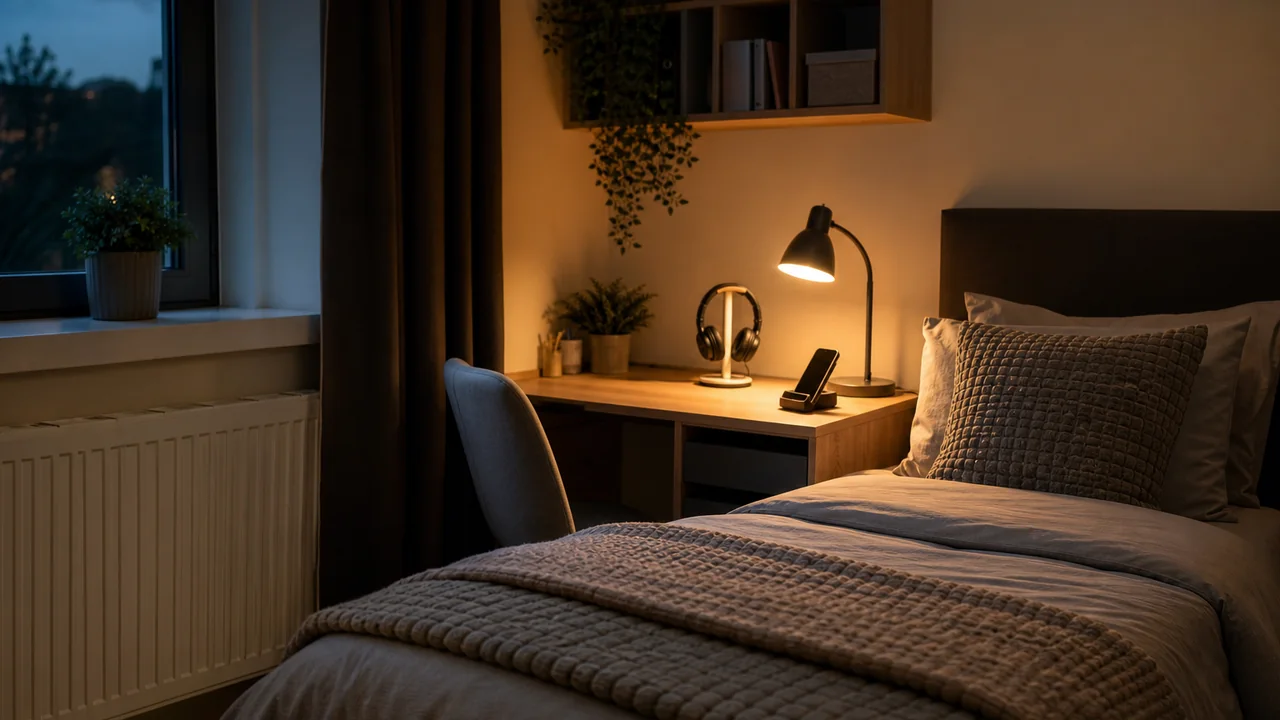
Older children and teens often need a routine that is visible and boring rather than complicated. Screens leave the bed area, the room moves from bright light to warm low light, and the same last cue repeats.
A night light should be low, warm and out of direct eye line. A bright room light used until the final minute makes the bedroom feel active no matter what the clock says.
This guide is not for infant sleep and it is not medical advice. It is a simple room setup pattern for families.
Where this guide fits
This page sits in the screen-boundary cluster. It treats blue light as one part of a wider evening exposure pattern: brightness, distance, content, room light and whether the device keeps the brain in work or scrolling mode.
Practical inputs to compare: Measure hours after 7pm, device type, distance from the face, room lighting and the latest realistic stop time.
How to read the result: Treat these inputs as a bedroom pattern, not a one-night verdict. If the same cue shows up on several ordinary nights, the next change is easier to choose and easier to reverse if it does not help.
- blue light
- screen brightness
- phone distance
- night mode
- active scrolling
- screen cut-off
- close-range device use
- bedside charging
Keep it narrow: Do not change lamp type, screen cut-off, bedding, window opening and wake time on the same night. Hold the other cues steady so the page stays linked to one room question.
What to try tonight
- Choose one cue: light, screen boundary, temperature, humidity or airflow.
- Keep the sleep target and morning note simple.
- Repeat the change before judging it.