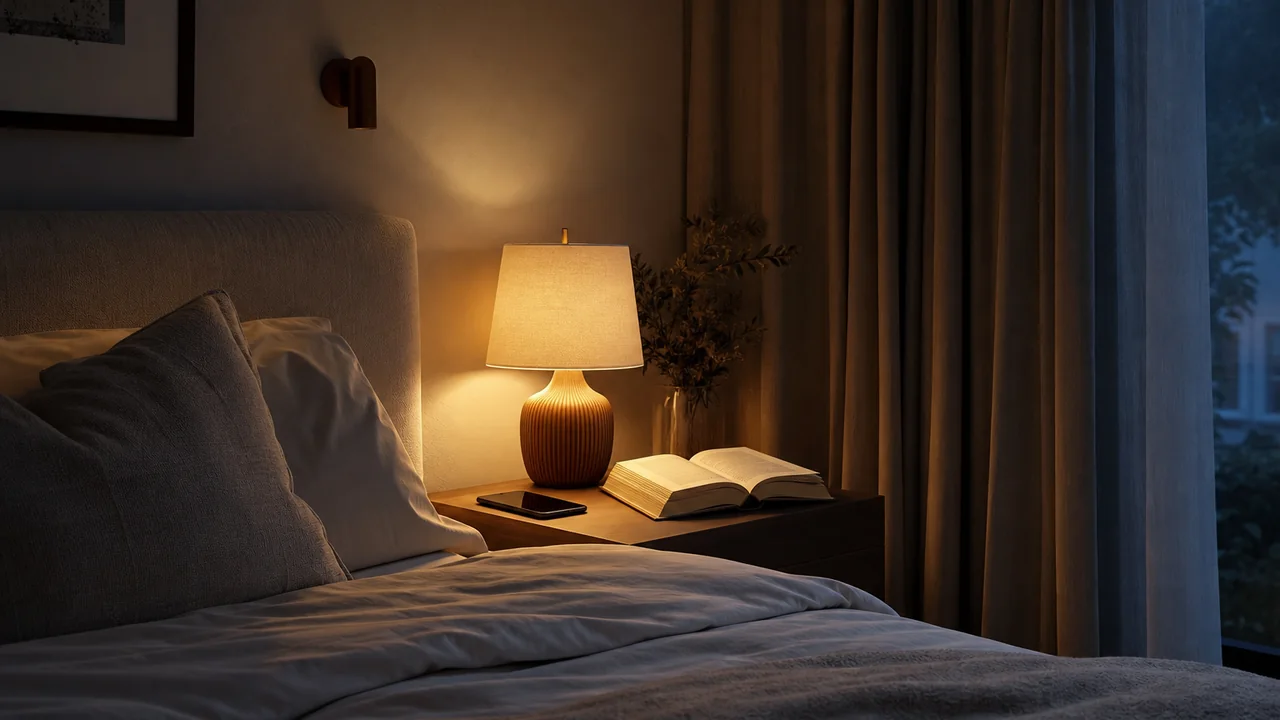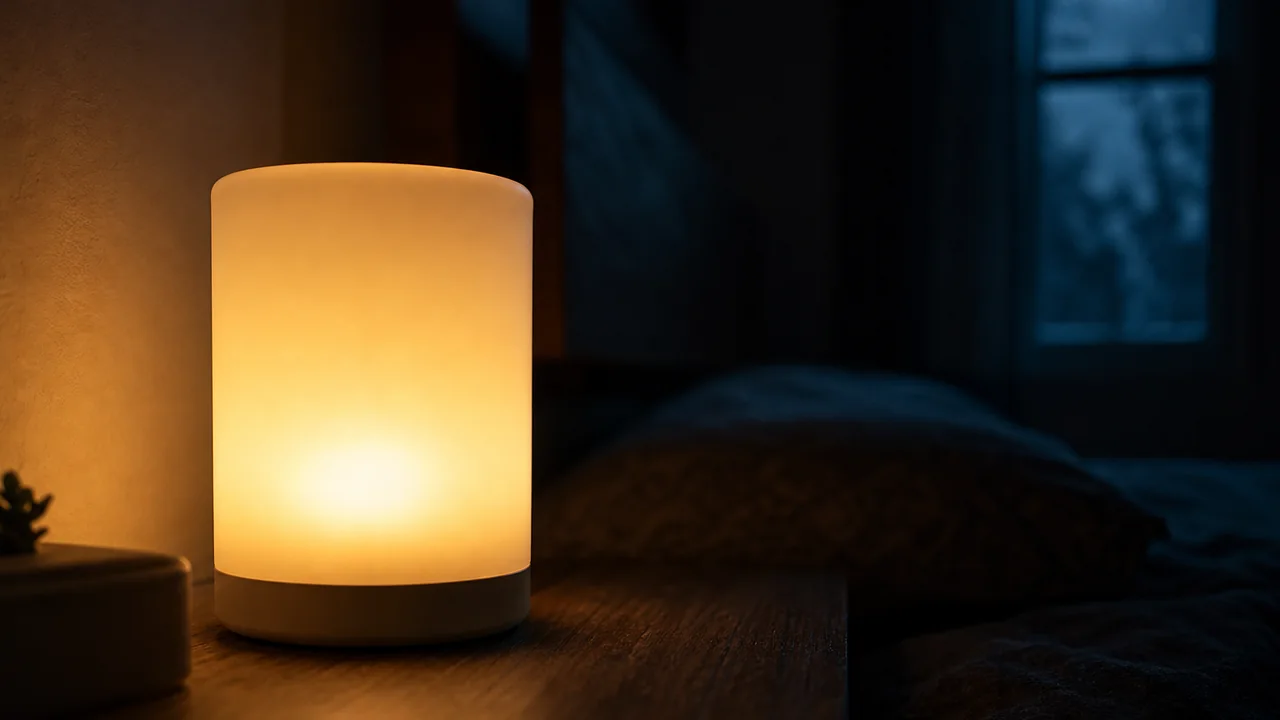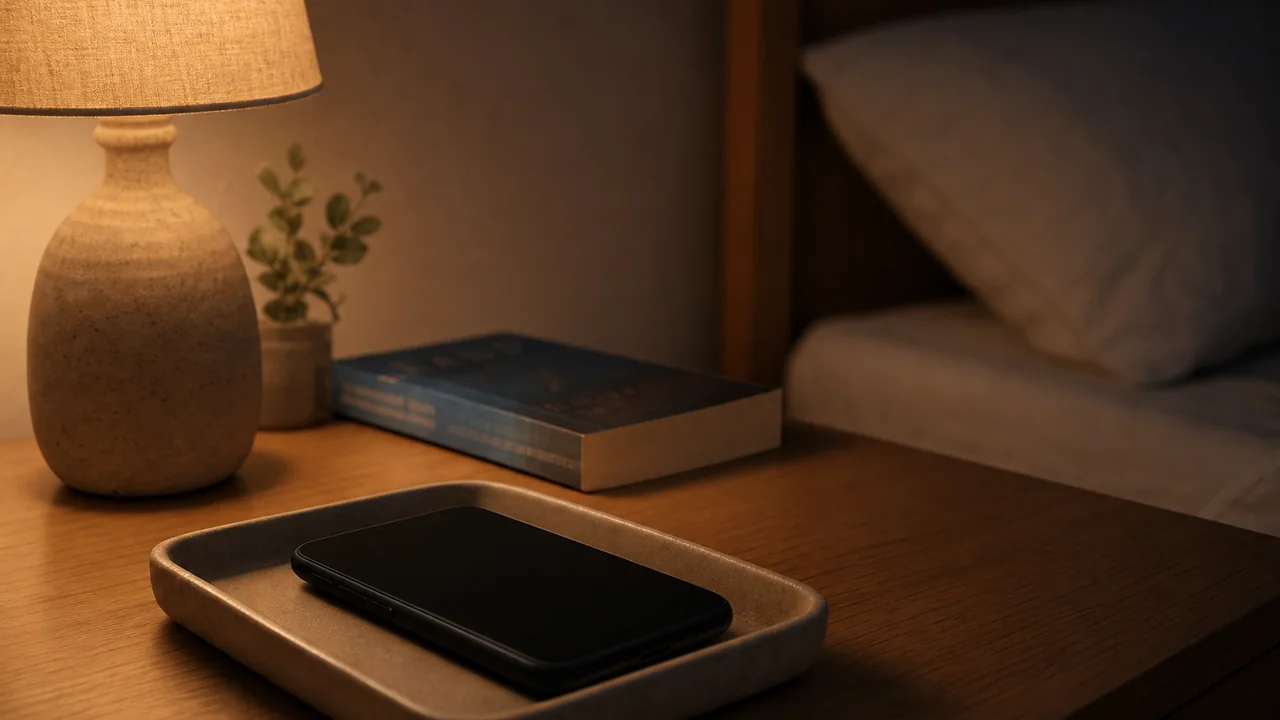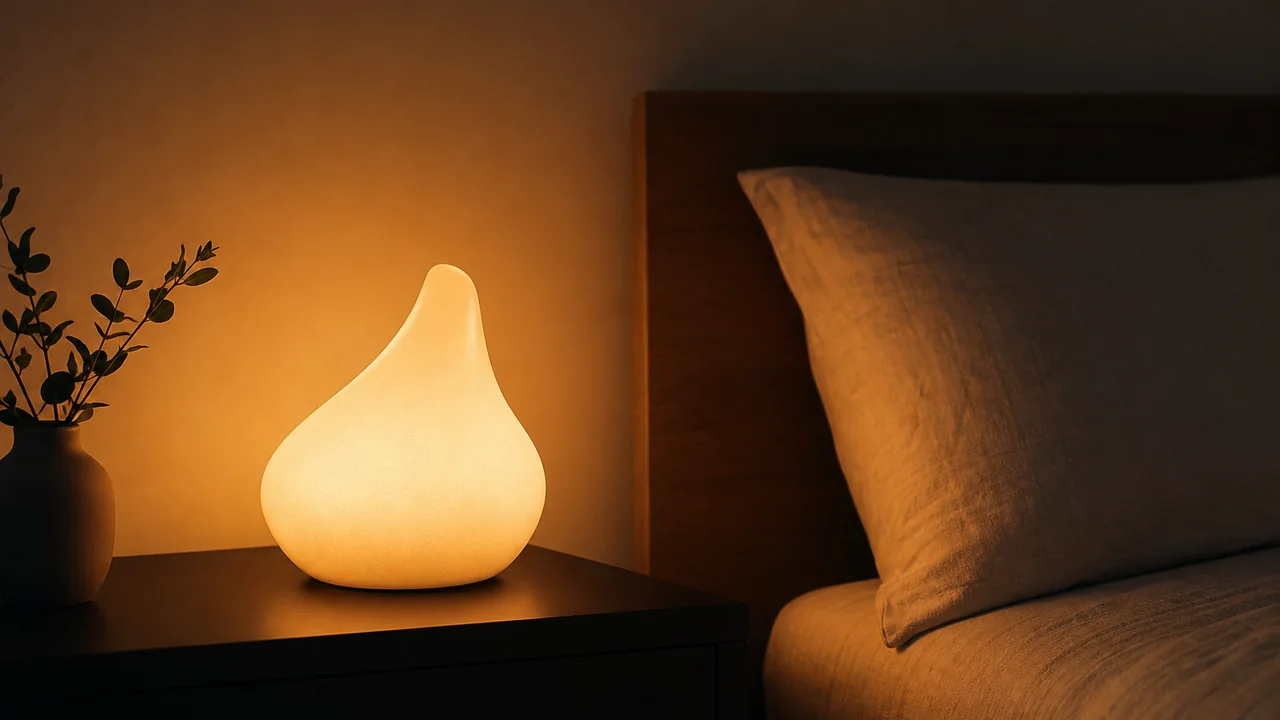
The strongest part of the original Drift Light concept was the routine cue. A lamp that fades down over a known window makes bedtime feel like a transition rather than a switch.
The exact number is less important than repeatability. A thirty-seven minute fade is long enough to feel different from normal evening light and short enough to fit into a real night.
Modern routines can use the same idea: one warm lamp, one phone boundary, one low-light finish and a consistent sleep target.
Where this guide fits
This page belongs to the evening-light cluster: how a bedroom moves from normal living light to a lower, warmer and less stimulating state before the sleep target. The useful signal is not one perfect bulb value, but the visible pattern of direct light, lamp position, brightness, timing and whether the final routine feels different from the rest of the evening.
Practical inputs to compare: Use time, lamp type, brightness setting, distance from the bed and repeatability as the practical measurements.
How to read the result: Treat these inputs as a bedroom pattern, not a one-night verdict. If the same cue shows up on several ordinary nights, the next change is easier to choose and easier to reverse if it does not help.
- warm light
- bedside lamp
- ceiling light
- glare
- colour temperature
- dimming routine
- 37-minute fade
- low indirect light
Keep it narrow: Do not change lamp type, screen cut-off, bedding, window opening and wake time on the same night. Hold the other cues steady so the page stays linked to one room question.
What to try tonight
- Choose one cue: light, screen boundary, temperature, humidity or airflow.
- Keep the sleep target and morning note simple.
- Repeat the change before judging it.