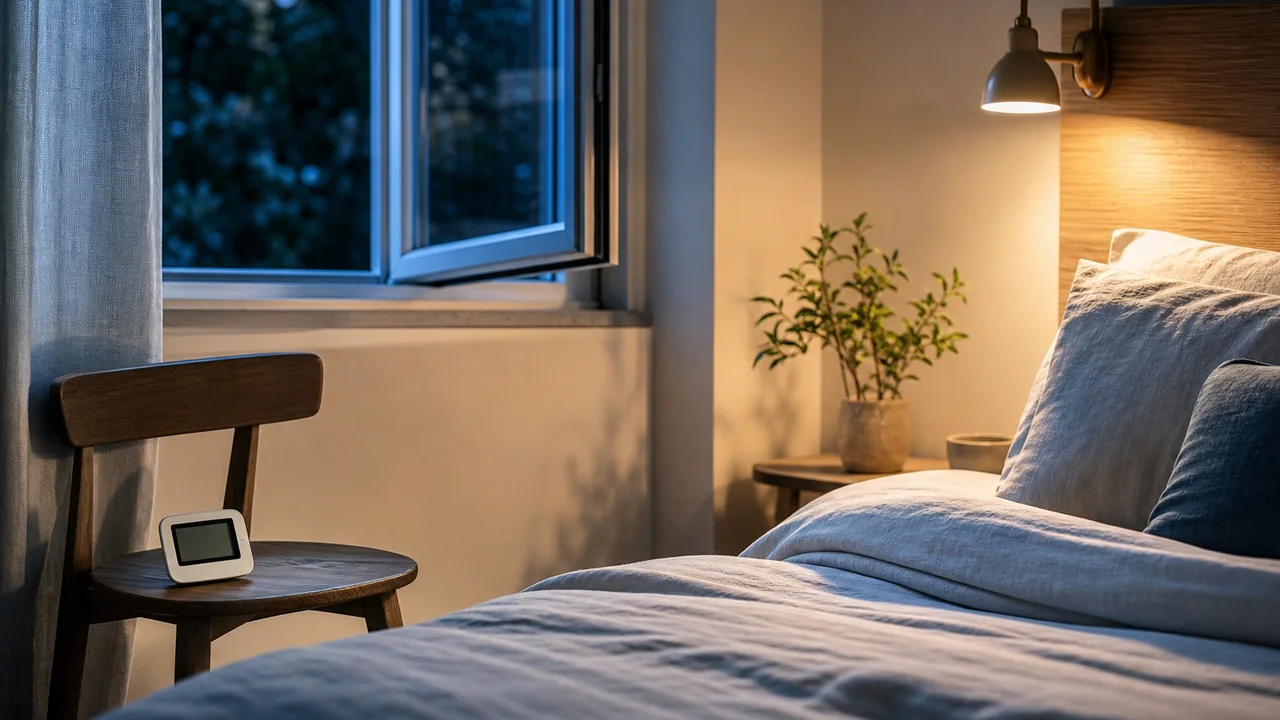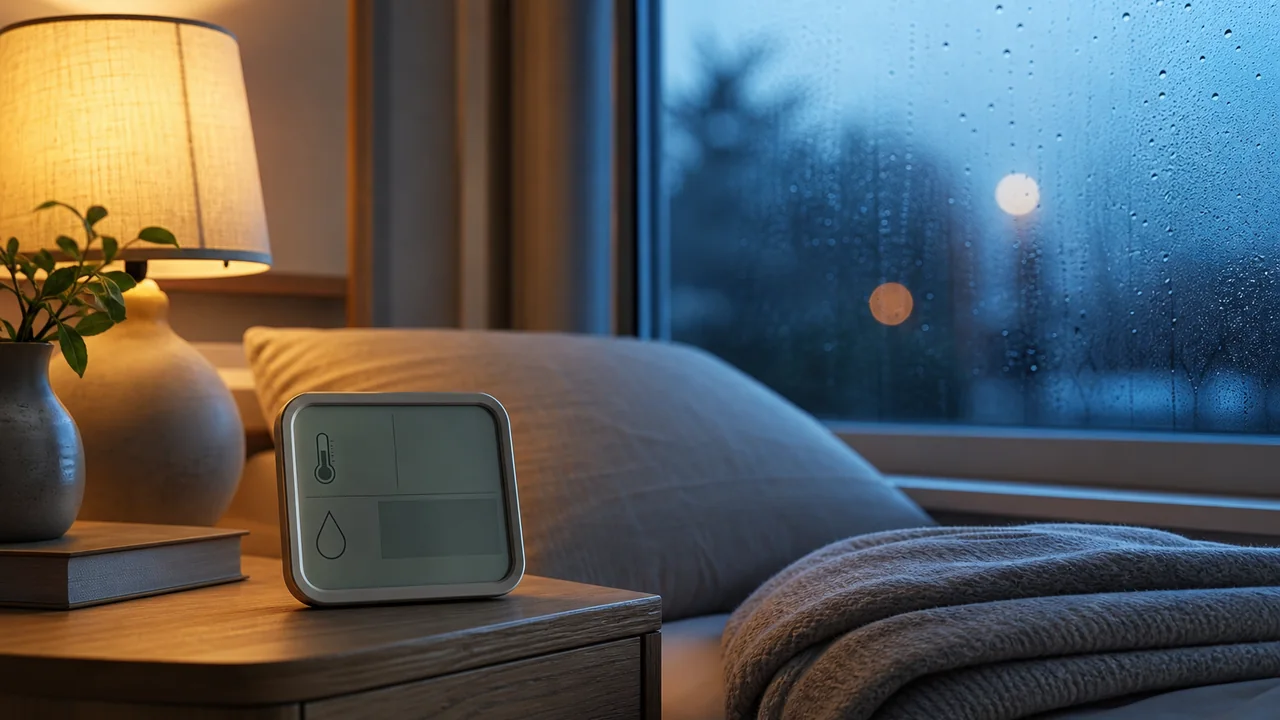
Bedroom temperature advice is usually quoted as a narrow ideal range. Real homes are messier. The same number can feel different depending on bedding, airflow, humidity, draughts and whether the room cools sharply by morning.
A useful temperature check records bedtime and morning, not just one reading. If the room starts warm and stays warm, airflow or heat retention may be the issue. If it starts comfortable and becomes cold by morning, pre-warming and draught control may matter more.
Change one thing at a time. Bedding, heater timing, window opening and fan use can all interact.
Where this guide fits
This page belongs to the bedroom-temperature cluster. It looks at the pattern across the night, not just a single reading: whether the room starts warm, cools too far by morning, traps heat, or feels uncomfortable because bedding, draughts and airflow are interacting.
Practical inputs to compare: Record bedtime temperature, morning temperature, room feel and the single change tested next.
How to read the result: Treat these inputs as a bedroom pattern, not a one-night verdict. If the same cue shows up on several ordinary nights, the next change is easier to choose and easier to reverse if it does not help.
- bedroom temperature
- thermal comfort
- overheating
- cold room
- temperature swing
- bedding
- draughts
- pre-warming
Keep it narrow: Do not change lamp type, screen cut-off, bedding, window opening and wake time on the same night. Hold the other cues steady so the page stays linked to one room question.
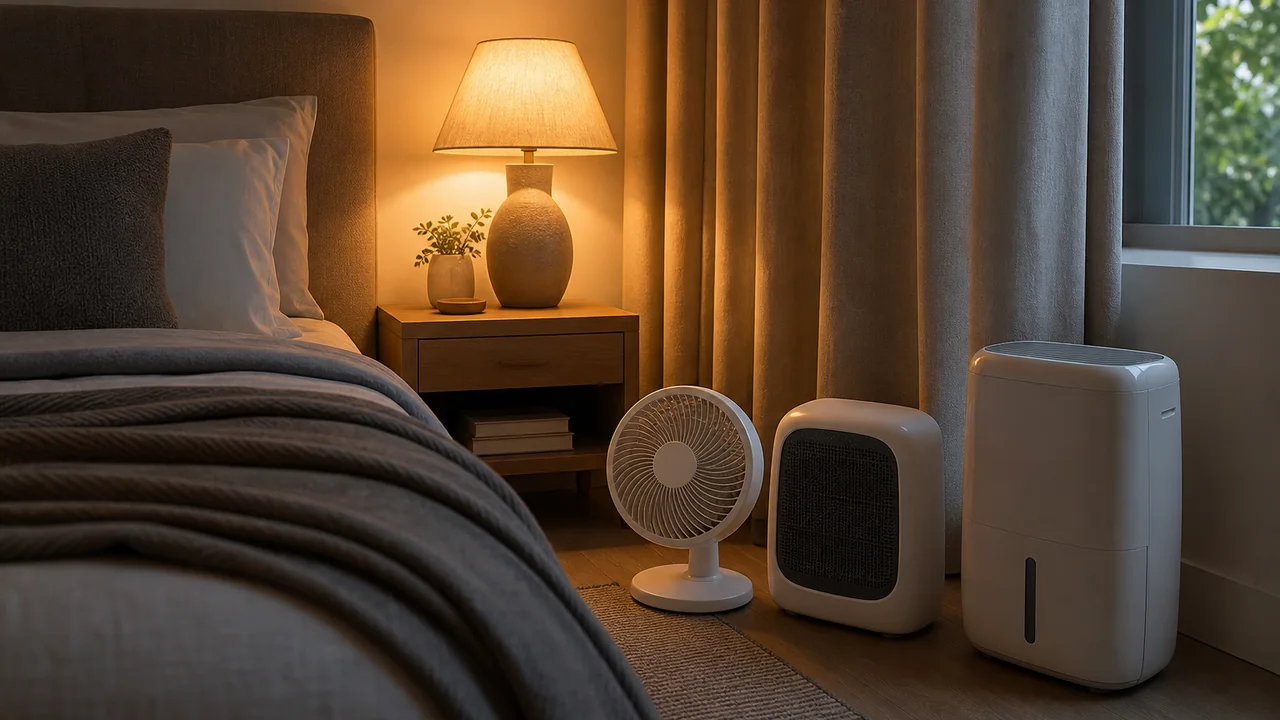
If the same bedroom pattern repeats for several nights, compare the relevant category at National Heater Shops rather than changing every room variable at once.
- portable electric heaters
— rooms that repeatedly feel too cold - cooling fans
— rooms that hold heat overnight - portable air conditioners
— persistent summer heat
What to try tonight
- Choose one cue: light, screen boundary, temperature, humidity or airflow.
- Keep the sleep target and morning note simple.
- Repeat the change before judging it.